
 Roamset Health Team

Green tea for weight loss has long been promoted as a natural fat-burning drink—but in 2026, with so many supplements and “quick fixes” available, is it still relevant?
If you’re trying to lose weight naturally without relying on aggressive fat burners, green tea might be one of the simplest additions to your routine. But before you start drinking it daily, it’s important to understand what it actually does—and what it doesn’t.
This guide breaks down the real science, benefits, and limitations of green tea for weight loss.
How Green Tea Helps With Weight Loss
Boosts Metabolism Naturally
The Metabolic Power of Catechins: How green tea stimulates calorie burning and increases energy expenditure. Catechin polyphenols, potent antioxidants in green tea, are linked to boosting metabolism by stimulating calorie burning. Studies show green tea can increase energy expenditure by up to 4% over 24 hours, helping to prevent weight gain and encouraging fat loss.
Green tea contains catechins, powerful antioxidants that help increase your body's calorie-burning ability.
- Can increase energy expenditure by ~3–4%
- Supports fat oxidation (burning fat for energy)
- Works even at rest
This makes it useful for slow metabolism and stubborn fat loss
Helps Control Appetite
Natural Appetite Control: Understanding green tea's role in regulating blood sugar and leptin levels. If you blame your appetite on unending or uncontrollable cravings, green tea and weight loss may be just what you need. Green tea is known as an appetite suppressant due to its blood sugar-regulating properties. According to studies, green tea's polyphenols can reduce leptin levels, a protein that plays a major role in increasing appetite.
Struggling with cravings? Green tea may help regulate hunger by influencing hormones like leptin, which controls appetite.
- Reduces overeating
- Stabilises blood sugar levels
- Helps control emotional eating
Reduces Fat Absorption
Green tea contains compounds like:
- Catechins
- Caffeine
- L-theanine
These can slow fat digestion by inhibiting enzymes such as lipases. 👉 Result: Less fat storage after meals
Blocking Fat Absorption: The science of inhibiting fat-digesting enzymes with tea components. Green tea has three major components that can promote fat loss. These components are catechins, caffeine, and theanine, which can inhibit gastric and pancreatic lipase, enzymes that digest and store fat in a form that is healthy for the body. Drinking green tea after a meal can slow the rise of blood sugar and thus prevent fat storage in the body.
A Zero-Calorie Replacement for High-Calorie Drinks
Switching from sugary coffee, Frappuccinos, and sweetened beverages. 👉 Drinking green tea can instantly cut hundreds of calories daily.
A Zero-Calorie Alternative: Replacing sugary brews with a healthy, traditional caffeine source. Start counting calories on your morning brew, and guess what you will find? Double cream, double sugar, mocha, frappuccino, etc., are causing havoc on your waistline. If you are addicted to a dose of caffeine in the morning but want those calories off your diet, then green tea and weight loss brew is right for you.
Are There Any Risks?
While green tea is generally safe, there are a few things to keep in mind:
- Contains caffeine (may affect heart rate or sleep)
- Not ideal in excess for people with high blood pressure
- Can cause mild stomach discomfort if taken on an empty stomach
👉 Tip: Opt for decaf green tea if you're sensitive to caffeine.
Safety and Considerations: Navigating caffeine content and heart health for safe consumption. The main health concern with green tea is its caffeine content, which can be risky for those with heart issues or high blood pressure. However, decaffeinated green tea options are available, allowing people with health concerns to enjoy its benefits safely.
What Does Science Say in 2026 about Green Tea for Weight Loss?
- Green tea increases fat oxidation
- Improves energy expenditure
- Works better than caffeine alone
Interestingly, studies found that green tea performs better than plain caffeine, suggesting other compounds play a role. 👉 Conclusion: Green tea does support weight loss, but it’s not a magic solution.
Why Do Countries Like Japan Stay Lean?
Countries like Japan and China have consumed green tea for thousands of years.
- Regular daily consumption
- Health-focused lifestyle
- Lower processed food intake
While green tea helps, it’s part of a larger healthy lifestyle.
The Truth: Is Green Tea Enough for Weight Loss?
Let’s be honest:
👉 Think of it as a support tool—not the main solution
Who Should Use Green Tea for Weight Loss?
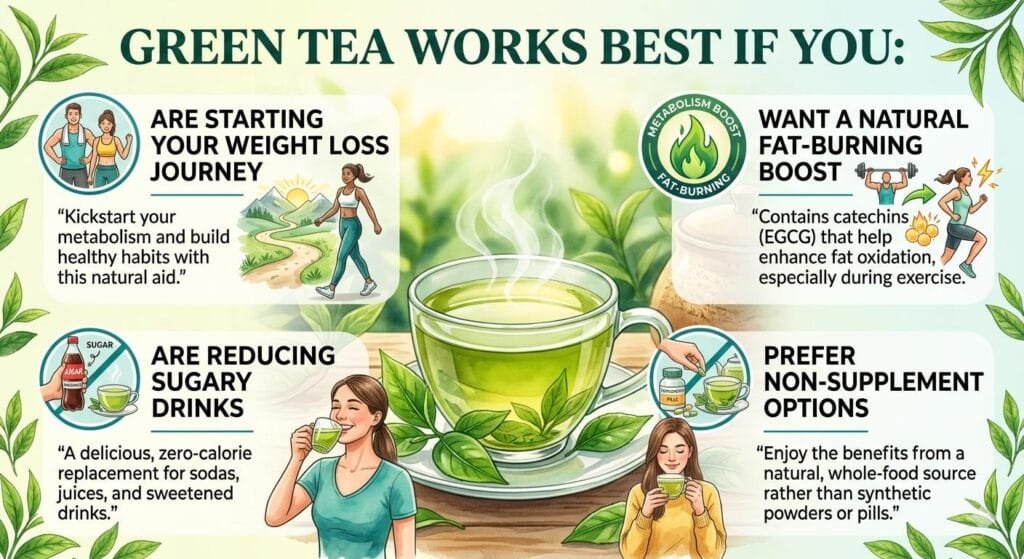
Smart Strategy (2026 Approach)
Instead of relying only on green tea: 👉 Combine it with:
- High-protein diet
- Daily movement
- Targeted fat-burning supplements (if needed)
👉 What to Read Next
If you're serious about fat loss, green tea alone may not be enough.
(Backed by real user results and research—not hype)