
 Roamset Health Team

Introduction: Why Stress Hits Men Differently
Stress doesn’t always show up as anxiety or panic. For many men, it looks like irritability, fatigue, lack of motivation, poor sleep, or even complete emotional shutdown. The problem? Most men are taught to push through stress—not manage it.
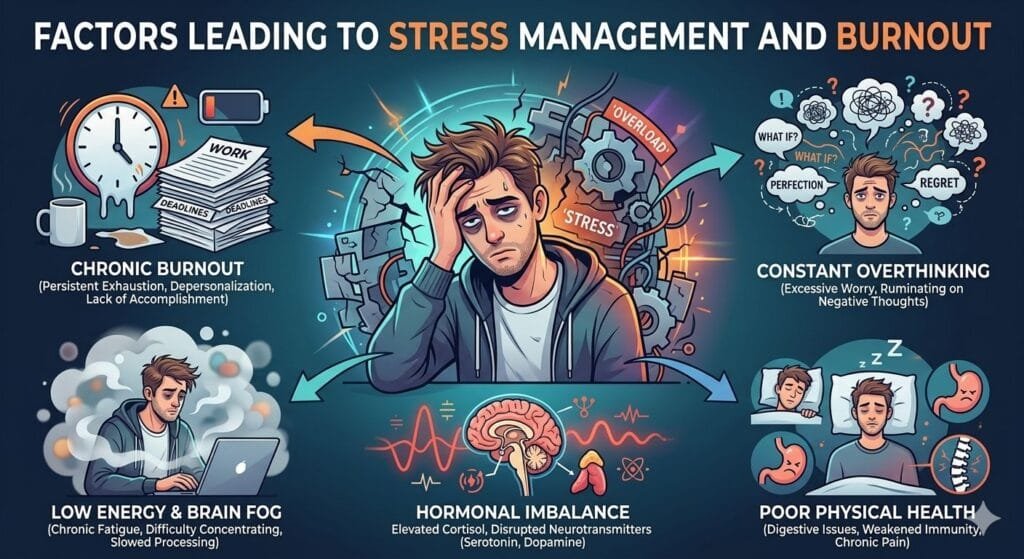
Over time, this leads to:
- Chronic burnout
- Constant overthinking
- Low energy and brain fog
- Hormonal imbalance
- Poor physical health
This guide is not about vague advice. It’s about real, practical stress-management strategies that work in 2026.
What Is Burnout (And Why You Shouldn’t Ignore It)
Burnout is more than just being tired. It’s a state where your mind and body stop responding properly to stress.
Common Signs of Burnout:
- You wake up tired even after sleeping
- Small tasks feel overwhelming
- You feel disconnected or numb
- Productivity drops drastically
- You rely on caffeine, alcohol, or distractions
“Best Supplements for Stress and Cortisol Control (2026)”
The Real Problem: Your Nervous System Is Overloaded
Most advice tells you to “relax.” But the real issue lies deeper, in your nervous system.
Your body operates in two modes:
- Fight or Flight (Stress Mode)
- Rest and Recovery (Healing Mode)
Modern life keeps men stuck in constant fight-or-flight, leading to:
- High cortisol levels
- Anxiety and overthinking
- Poor digestion and sleep
How to Reset Your Nervous System Naturally
1. Controlled Breathing (Instant Stress Reset)
Slow breathing signals safety to your brain.
Try this:
- Inhale for 4 seconds
- Hold for 4 seconds
- Exhale for 6 seconds
Just 5 minutes can reduce stress instantly.
2. Cold Exposure (Fast Nervous System Reset)
Cold showers aren’t just hype—they activate your parasympathetic system.
- Start with 30 seconds
- Gradually increase to 2–3 minutes
3. Morning Sunlight (Natural Mood Booster)
Exposure to sunlight:
- Regulates cortisol
- Improves sleep cycles
- Boosts testosterone naturally
4. Movement (Stress Needs an Outlet)
Stress is physical. If you don’t release it, it builds up.
Best options:
- Strength training
- Walking outdoors
- Short high-intensity workouts
👉 “Top Testosterone Boosting Supplements for Men (2026)”

ULTRA MALE® Premium Testosterone Booster for Men
ULTRA MALE is an unparalleled total testosterone-enhancing blend of natural herbs and minerals that are scientifically proven to support healthy testosterone levels and vitality for men.
How to Stop Overthinking (Without ‘Trying to Relax’)
Overthinking is not a mindset issue—it’s a nervous system issue.
Practical Techniques:
1. Brain Dump Method
Write everything in your head on paper. No structure needed.
2. The 90-Second Rule
Most emotional reactions pass in 90 seconds—if you don’t feed them.
3. Limit Input Overload
Too much:
- Social media
- News
- Information
= Constant mental stimulation
👉 “Best Natural Supplements for Anxiety and Focus”
The Role of Sleep in Modern Stress Management
Poor sleep = higher stress = more overthinking.
Fix Your Sleep:
- Avoid screens 1 hour before bed
- Keep your room dark and cool
- Sleep at the same time daily
Natural Support:
- Magnesium
- Ashwagandha
- Herbal sleep aids
👉 Best Sleep Supplements for Deep Recovery (2026)”
Nutrition That Reduces Stress (Not Adds to It)
Most men ignore this, but food directly affects stress levels.
Avoid:
- Excess caffeine
- Sugar spikes
- Processed foods
Add:
- Protein-rich meals
- Healthy fats
- Hydration
👉 “Top Anti-Stress Diet Plans and Supplements”
Daily Stress Management Routine (Simple & Practical)
Here’s a no-BS routine you can actually follow:
Morning:
- 10 minutes of sunlight
- Light movement or walk
Afternoon:
- Focused work (limit distractions)
- Proper meals
Evening:
- Workout or physical activity
- Reduce screen exposure
Night:
- Deep breathing
- Consistent sleep time
When You Should Take Stress Seriously
Stress becomes dangerous when it turns chronic.
Warning Signs:
- Constant fatigue
- Low libido
- Brain fog
- Digestive issues
- Mood swings
At this stage, lifestyle alone may not be enough.
👉 “Best Cortisol-Lowering Supplements That Actually Work (2026)”
Understanding Stress and Its Impact
Stress is an inevitable part of life, but when it becomes chronic, it can severely affect your well-being. It’s crucial to understand when stress goes beyond the ordinary, and recognising the signs can help you mitigate its negative effects.
Warning Signs of Serious Stress
One of the most significant indicators of excessive stress is constant fatigue. If you find yourself feeling drained despite a full night's rest, it may indicate that your body is overwhelmed. Additionally, experiencing low libido can be another signal that stress is taking a toll on your physical health.
Brain fog is yet another troubling symptom. This condition can lead to difficulty concentrating and making decisions, ultimately affecting your productivity. It's important to pay attention to these cognitive changes as they can worsen over time.
Emotional and Physical Manifestations
Aside from cognitive symptoms, stress often manifests through digestive issues and mood swings. If you are experiencing gastrointestinal problems, such as an upset stomach or changes in appetite, stress may be a contributing factor. Likewise, mood swings can affect your daily interactions and relationships, compounding feelings of isolation.
In summary, while stress is a normal response to challenging situations, it's essential to take it seriously when it becomes chronic. Should you recognise any of the aforementioned warning signs, consider consulting with a healthcare professional to explore effective strategies for managing stress.