 Roamset Health Team
What Is the Best Fitness Routine for Women?
The best fitness routine for women combines sensible strength training, light cardio, and daily movement. Think of it as a balanced workout approach that supports your body and builds sustainable habits.
Here’s a practical, easy-to-follow starting plan you can try for 4 weeks and then adjust based on how your body responds:
- Strength training: 2–3 times per week
- Walking or cardio: 20–30 minutes daily
- Flexibility exercises: 2–3 times per week
This combo supports gradual weight loss, improved muscle tone, and long-term health when paired with consistent effort. Expect to see small changes in weeks and more noticeable progress over months — steady training and sensible nutrition usually win over quick fixes.
Why Women Need a Different Fitness Approach
Many generic workout plans are written like one-size-fits-all. In practice, that can leave women spinning their wheels because they don’t address common goals and movement patterns.
Many women tend to benefit more from programs that emphasise:
- Muscle toning instead of bulking — focusing on controlled reps and progressive overload to build lean muscle without chasing large size.
- Core and upper-back strengthening — improving posture, balance, and how you carry daily loads, which also supports better performance in other exercises.
- Fat loss + metabolism support — combining strength work with regular movement and sensible nutrition to help the body become more efficient over time.
These are general patterns, not rules. Individual needs vary, but tailoring your training and sticking with a simple plan often beats jumping from program to program. Read on for beginner-friendly exercises and a practical weekly plan.

Benefits of Strength Training for Women
Strength training is one of the most effective, evidence-backed ways to improve overall health and daily function for women of all ages.
Key Benefits:
- Builds lean muscle and supports metabolism — research shows that adding resistance work helps preserve and build muscle, which supports daily energy use and movement.
- Helps with fat loss when combined with good nutrition — strength work is not a magic bullet, but it makes workouts and daily activity more effective for body composition over time.
- Supports bone health — weight-bearing and resistance exercises are commonly recommended to help maintain bone density as we age.
- Improves posture and practical strength — stronger back, hips, and legs make everyday tasks easier and reduce fatigue.
- Boosts confidence and mental well-being — many people report better mood and self-image after regular training.
Consistent training produces noticeable strength gains over weeks to months. For beginners, a simple way to start is with 2–3 compound moves (squat, hinge, push, or pull), 2–3 sets of 8–12 reps, gradually increasing load or reps as you get stronger.
Best Exercises for Women (Beginner-Friendly)
If you're just starting, focus on a handful of reliable exercises that build strength and movement patterns. Below are simple options you can do at home or in the gym, with brief cues and beginner sets/reps.
1. Lower Body
- Squats — trains quads, glutes, and core. Start with bodyweight squats: hips back, bend knees, chest up. Aim for 2–3 sets of 8–12 reps.
- Lunges — good for single-leg strength and balance. Step forward or reverse, bend both knees to ~90°. Try 2 sets of 8–10 reps per leg; hold a light dumbbell if you have one.
2. Core
- Planks — build core endurance. Keep a straight line from head to heels, brace your core. Hold 20–40 seconds for 2–3 rounds.
- Leg raises — target the lower abs and hip flexors. Lie on your back and lift your legs slowly with control. Start with 2 sets of 8–12 reps.
3. Upper Body
- Push-ups (modified if needed) — chest, shoulders, and triceps. Start on knees or incline: hands slightly wider than shoulders, lower with control. Aim for 2–3 sets of 6–12 reps, depending on strength.
- Dumbbell rows — build upper-back and arm strength. Hinge at the hips, back flat, and pull the dumbbell toward your ribcage. If using one dumbbell, support your body with the opposite hand; aim for 2–3 sets of 8–12 reps per side.
4. Cardio
- Walking — low-impact daily movement that supports recovery and calorie burn. Aim for 20–30 minutes most days.
- Cycling — great for lower-body conditioning and low joint stress. Use it as a steady-state or interval option in your week.
- Swimming — full-body cardio that’s easy on joints and builds endurance.
These exercises cover the major movement patterns (squat, hinge, push, pull, carry and core). For beginners, a simple 20–30-minute workout could be a mini circuit: 3 rounds of 10 squats, 8 push variations, 10 lunges (total), and 30s plank — rest as needed. Use bodyweight or light weights while focusing on controlled movement and proper starting position. As you progress, add reps, sets, or weight to continue improving strength and muscle growth.
Simple Daily Fitness Plan for Women
Here’s a realistic routine you can follow that fits into a busy life and helps build consistent habits.
Day Plan Example:
- Morning: 10–15 minute walk — easy daily movement to boost circulation and start the day.
- Alternate days: Strength training (20–30 mins) — a focused workout using 2–4 exercises (squats, hinge, push, pull). Aim for 2–3 sets of 8–12 reps per exercise; use bodyweight or light weights if training at home.
- Evening: Light stretching or yoga — helps recovery, mobility, and sleep quality.
Try this simple 1-week sample plan and tweak it to suit your schedule:
- Mon — Strength (lower body focus): 20–30 min (squats, lunges, hinge).
- Tue — Walk 20–30 min + 5–10 min mobility/stretching.
- Wed — Strength (upper body & core): 20–30 min (push variations, rows, planks).
- Thu — Active recovery: easy walk or yoga; prioritize movement but keep intensity low.
- Fri — Full-body strength or circuit: 20–30 min, combine 3–4 movements (2–3 rounds).
- Sat — Longer walk, cycling, or swim — 30+ minutes for cardio variety.
- Sun — Rest day: light movement and recovery (stretching, foam rolling) as needed.
Notes: Rest days are part of progress — schedule at least one full rest day per week. As you adapt, increase reps, rounds, or the weight you use. Aim for balanced meals with protein at each meal to support recovery and muscle growth, but avoid strict or unrealistic promises about immediate weight changes.
Action step: Pick this plan and track one simple metric (minutes walked, workouts completed, or reps) for 4 weeks — small, consistent improvements add up.
10 Daily Habits to Stay Fit and Healthy
- Eat a balanced diet — include a mix of vegetables, whole grains, healthy fats, and a source of protein at each meal to support workouts and recovery.
- Drink enough water — staying hydrated helps energy, focus, and performance during both workouts and daily movement.
- Include key nutrients like calcium and vitamin D as part of a varied diet — these support bone health and overall function; consult a healthcare professional for personalized needs.
- Avoid smoking and limit alcohol — both can undermine recovery, sleep, and long-term fitness goals.
- Stay physically active daily — short walks, taking stairs, or quick home workouts add up and support weight control and fitness.
- Manage stress — simple habits like short breathwork, a walk, or prioritizing sleep help you stay consistent with training.
- Protect your skin from sun exposure — use sunscreen and sensible sun habits when exercising outdoors.
- Maintain basic hygiene, including dental care — small health routines support overall well-being and confidence.
- Schedule regular checkups — preventive care helps catch issues early and keeps your fitness plan on track.
- Practice safe habits — warm up before workouts, respect rest days, and progress gradually to avoid injury.
These habits create long-term results—not temporary fixes. If you’re starting out, pick one nutrition habit (like adding protein to each meal) and one movement habit (like daily 10–15 minute walks) to focus on this week. Small, consistent changes help your body and workouts improve over time.
7 Expert Fitness Tips for Women
These are practical, coach-tested tips that help you get steady results without overcomplicating your workout plan.
- Choose a plan that suits your body — pick a routine you can stick with (time, equipment, and preferences matter). If you hate the gym, a home workout plan with bodyweight and light weights will work just fine.
- Set realistic goals — aim for small, measurable targets (increase reps, add one extra workout per week). Track one metric to see progress.
- Focus on muscle-building exercises — include compound moves (squats, rows, presses) to drive strength and muscle growth. Start with 2–3 sets of 8–12 reps and progress slowly.
- Track your progress — log workouts, reps, and weights. Even simple tracking helps you increase load or reps over time and avoids plateaus.
- Control your movement — avoid using momentum. Move with intent: a controlled starting position, steady tempo, and full range of motion protect joints and build real strength.
- Add variety to workouts — rotate exercises or change rep ranges every 4–6 weeks to keep workouts fresh and encourage continued gains.
- Stay consistent — short, regular workouts beat sporadic intense sessions. Apply one tip per week and focus on long-term habits rather than quick fixes.
Tip from a trainer: if you’re unsure where to start, a personal trainer or trusted coach can help build a simple progression and show safe form — but you can make great progress with a sensible plan and consistent effort.
Remember: consistency matters more than intensity. Small increases in reps or weight, tracked over weeks, add up to meaningful changes in strength and body.
What Most Women Get Wrong About Fitness
It’s easy to fall into common traps when starting a workout plan — and none of them needs to derail your progress.
Many women:
- Focus only on weight loss — concentrating solely on the scale often ignores strength, mobility, and how clothes fit. Instead, track strength or performance (more reps, heavier weight) alongside weight.
- Avoid strength training — fear of “bulking” or not knowing how to start leads some to skip it. In reality, regular strength training builds functional strength and helps shape the body without requiring heavy, bodybuilder-style sessions.
- Expect quick results — fitness is a marathon, not a sprint. Short-term fixes fade; consistent training and sensible nutrition deliver lasting change.
The better approach is to prioritize building strength and sustainable habits. Swap one cardio-only session this week for a short strength workout — small changes like that help your body and workouts improve over time.
Which Fitness Approach Works Best?
Not every method fits every goal. The approaches below tend to be better suited to specific outcomes, but the best strategy combines the right elements for your needs.
Some approaches are better for:
- Fat burning — a mix of regular strength training and steady movement helps increase daily energy use and supports body composition over time.
- Appetite control — consistent meals, protein at each meal, and stable activity patterns make hunger easier to manage than crash diets.
- Metabolism boosting — building muscle with resistance training and staying active most days helps the body use energy more efficiently.
Choosing the right method for your goal can save months of effort and frustration. See the Simple Daily Fitness Plan for a ready-to-use week that combines these elements.
How can a beginner woman start a fitness routine?
Begin simply: walk for 10–15 minutes daily, add basic strength training 2–3 times per week (20–30-minute sessions), and increase intensity slowly over weeks. In month two, add reps, rounds, or a little extra weight to keep progressing.
Is strength training good for women?
Yes. Strength training supports lean muscle, healthier body composition, stronger bones, and better daily function. It’s effective whether you train at the gym or at home with weights or bodyweight exercises.
How many days a week should a woman exercise?
Most people do well exercising 3–5 days per week, combining strength training and cardio or daily movement. Adjust the number of workouts and intensity to your schedule and recovery—consistency matters more than hitting a perfect number.
Can women lose weight without going to the gym?
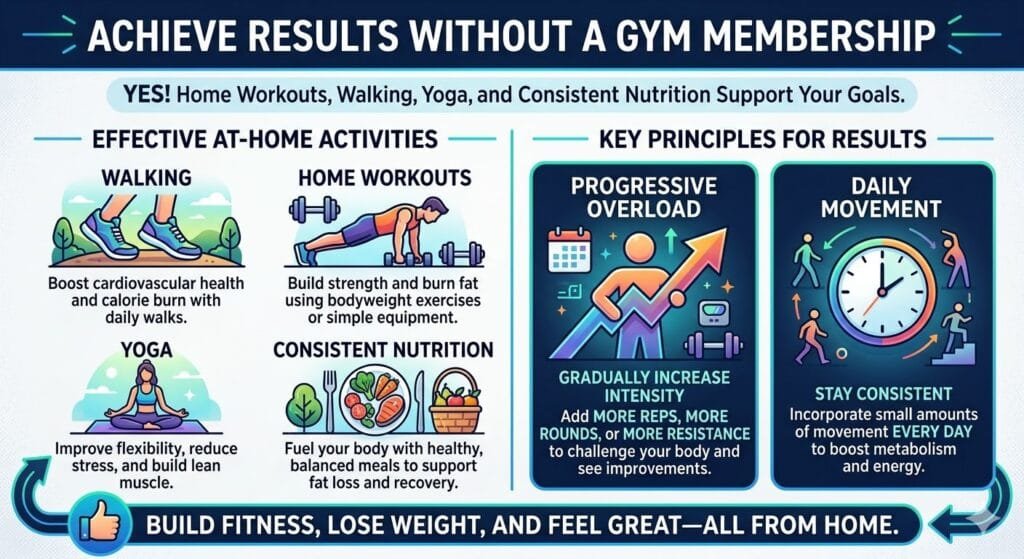
Yes. Home workouts, walking, yoga, and consistent nutrition can all support weight loss and improved fitness. Focus on progressive overload (more reps, rounds, or resistance) and daily movement to get results without a gym membership.
What is the fastest way for women to get fit?
There’s no shortcut, but the most efficient approach combines four things:
- Strength training — build muscle and functional strength.
- Daily movement — regular walking or low-intensity activity to boost calories burned and recovery.
- Proper nutrition — prioritize protein and balanced meals to support recovery and performance.
- Consistency — steady effort over weeks and months beats short, intense bursts.
Action step: pick one small change today — add a 10-minute walk, swap one cardio session for a 20-minute strength workout, or add protein to a meal — and track that metric for one week. Small, repeatable wins add up to lasting fitness.